Do we have a New Pulp Fiction and do we need one?

Last year, I wrote a trio of posts about the resurgence of pulp fiction and the “anything goes” spirit of the pulp era thanks to the electronic publishing revolution. You can find them here, here and here.

Now the New Pulp debate has come around again, set off by this post by Matt Blind at Rocket Bomber. It’s a very comprehensive post with lots of background detail about the US publishing and bookselling industries (Matt Blind is manager of a Barnes & Noble store). Matt Blind closes by pointing to the wild experimentation of pulp era of the early 20th century rather than the bestseller driven publishing system of the past twenty years as a model for this brave new publishing world, which is pretty close to what I and others have been saying in the posts linked above.

At Voices on the Square, Bruce McFarling echoes Matt Blind’s call for e-publishing to orient itself on the pulp model, though he goes back further in the history of popular publishing to include the dime novels and story papers of the late 19th century. Bruce McFarling also quotes from Tobias Buckell’s recent post on survivorship bias (i.e. the fact that successes are more notable than failure) in this brave new indie publishing world, which I linked to and commented on here.

Tobias Buckell responds to Bruce McFarling and points out that replicating the economics and publishing model of the pulp era is difficult today, because consumers now have more entertainment choices available to them than reading. Here is a quote:

Yeah, the biggest issue I see with this is a comment referenced but not truly appreciated in that blog post, which is that pulp serials were ‘like the TV’ of their day.

While I think eBooks are going to create a new low-cost market (and have, really), the evidence is more that they’re eating up the cheap paperback of the 70s and thereabouts, than pulp.

Pulp was ‘like the TV’ of the day.

Only, we *have* TV today.

And videogames.

Reading is not a dominant entertainment activity. Which is why any reading today is never going to exactly mirror reading of the past. This is the hiccup with paying too close attention to models of the past. The ecosystem has changed.

Now I’ve never been a big fan of “new storytelling medium replaces older storytelling medium” theories, especially since it doesn’t work that way. A new storytelling medium or new delivery system will take aware market share from the older system, but it will not completely replace it. Movies did not replace theatre, movies and radio did not replace reading, TV did not replace cinema and radio, VCRs did not replace TV, videogames did not replace TV. Even in the 1930s, people had other ways of getting entertainment than reading a pulp mag. Cinema was flourishing, vaudeville was on its last legs, but still around and radio was offering a host of audio plays, including such timeless classics as Orson Wells’ still fabulous adaption of War of the Worlds. Often, the different mediums supported each other. The iconic pulp hero The Shadow got his start as a radio drama and plenty of early pulp and comic book heroes appeared in movie serials.

And many of the old forms of entertainment are still with us, too. We still have theatres, we still have circuses, we still have operas and operettas, there are regular attempts to revive old variety style stage entertainment such as Vaudeville, Music Halls and Varieté (with varying success), the BBC still produces radio dramas (and not just “arty” dramas either, but entertainment), many countries including Germany still have their own versions of pulp mags and dime novels. Oberammergau still has a medieval style passion play, for goodness’ sake.

So while Tobias Buckell is correct that reading will never again become as dominant as it was in the 19th century (because by the early 20th, people had other options), entertaining fiction – whatever the delivery system – is in no danger of dying out. Never mind that different mediums have different strengths and weaknesses. I like to consume stories via reading, TV and movies, but videogames and audio dramas largely leave me cold. Others have other preferences.

Philip Brewer responds to both Bruce McFarling and Tobias Buckell and says that the big strength of the old time pulps was not the fact that they serialized stories, but the editorial vision of the various mags and how bundling short stories by new writers with novellas by big name writers could give a boost to the new writers.

What is striking about this reiteration of the New Pulp debate compared to the last one is that it tackles the question whether the pulp era is a good model for this brave new world of e-publishing almost entirely from the publishing and editorial POV (though Tobias Buckell and Philip Brewer are writers), while last year’s New Pulp debate mostly focussed on the freedom of and challenge for the writer to write quickly, often in multiple genres, and experiment with new forms and genres as well as the related freedom of the reader to try many different genres and types of fiction for comparatively little investment.

While I absolutely see the value in discussing New Pulp from an commercial and editorial POV, I am more interested in the writer POV myself. Because for me the most striking feature of the pulp era and the dime novel era before it was the sheer variety of stories and genres as well as the often feverish pace at which they were produced. All the genres of popular fiction we still have today can be traced back to the pulp or dime novel era, while plenty of what were viable genres back then (railroad stories, sports stories) have since vanished. This enormous variety gave the writer a great freedom, namely the freedom to write in multiple genres (and perhaps even create a new one), while knowing that there was a market for what they were writing out there somewhere. It might not be a big market and pulp writers were paid notoriously badly, but it was there.

It’s this energy that the digital publishing revolution is bringing back. Now I’m not the world’s most commercially minded writer – and indeed the extreme mercenary attitudes of some indie writers put me off. Nonetheless, in the traditional publishing paradigm, I evaluated every potential story idea with “Is there a market for this?” If the answer was “No”, then I shelved the idea hoping it would go away on its own. Now, however, every idea is potentially viable, because if there is no market for a given idea, I can make my own. Of course, the resulting story may sell only a handful of copies ever, but it has the chance to find readers, whereas it previously would have gathered dust on my harddrive.

Now the indie publishing has not yet realized its genre-busting, category-defying potential. Most of the big indie success are not just conventional but actually less adventurous than much of what the big publishers are putting out. And the only new genre created by the indie revolution, the so-called “new adult” romance, i.e. contemporary US-set romances featuring college aged characters, is about as far from experimental as you can get. On the contrary, many new adult romances with their domineering heroes and virginal doormat heroines are actually a step back for the romance genres, where more equal gender relationships have gradually emerged in the 1990s and 2000s.

But just because the potential of indie publishing has not yet been realized doesn’t mean that it isn’t there.

Send to Kindle
Posted in Publishing, Writing | Tagged , , , , , , | 2 Comments

Words of Pride Giveaway

Words of PrideOver on my personal blog, I have been talking about the recent sexism and racism uproars in the SFF community and also decided to talk up more awesome books that go beyond the limits of straight, white, male and Anglo-American.

This is why I’m proud to present you the Words of Pride Giveaway of books with GLBTQ themes, which was organized by Hildred Billings, author of lesbian romance novels set in Japan.

The giveaway runs until June 28th and includes more than twenty indie books with GLBTQ themes. There’s fantasy, there are romances, there’s erotica, there is YA and NA, there is historical fiction. Oh yes, and a little story of mine called Outlaw Love.

So enter if you want a chance to discover some great indie fiction away from the heterosexual mainstream for free. And since there are so many great books on offer, maybe you’ll even find a few you want to buy.

Send to Kindle
Posted in Announcements, Books | Tagged , , , , | Leave a comment

Interview with Writer Drew Avera

Drew AveraToday I have another author interview for you. I’ll probably add a page listing the author interviews so far to the site some day and I might even make this a regular feature.

But for now, I am pleased to welcome science fiction writer Drew Avera to my blog.

  1. Tell us a little about yourself.

My name is Drew Avera; I am an active duty US Navy veteran and self-published author. I grew up in Mississippi before joining the navy. I’ve been active duty for thirteen years and I now live in Virginia with my wife and two daughters.

  1. For how long have you been writing and why did you start?

I have been writing for one year, it’s been a crazy year though. I always had the desire, but not the drive. On my 30th birthday I decided that I would make my desires happen and I began the journey that finally led me to write Dead Planet.

Cover Dead Planet Exodus

  1. Tell us a bit about your novel Exodus, first book in the Dead Planet series

It is a science fiction novel, but it’s more than that. The themes of my book begin with the seed of a corporate government ruling the world that now exists on Mars. I explore ultimately where that corruption will take humanity, and what it would take to stop it, if it can even be stopped. I am not a conspiracy theorist, but I do see where things will go if we let things get out of control.

  1. What can you tell us about the Dead Planet series? How many parts will there be? Do you have a series bible, detailed outlines, pre-planned plot arcs, etc…?

I plan on a trilogy for the series that follows the main character, Serus Blackwell. He is a policeman who works for the Agency. They are essentially political assassins who do the dirty work for the Syndicate (the global corporate government). I also have two prequel novellas that will be part of the series, one will take place thirty years before Exodus and the other will take place when humanity first colonizes Mars and we have the first policeman.

  1. What was the inspiration for the Dead Planet series?

To be honest, I started a fantasy novel that was going nowhere. I heard about NaNoWriMo and decided to take a crack at it, but I had to start from scratch in order to qualify. I quickly came up with the idea and plotted it out so I had a basic outline to follow. Then on November 1st I began the first chapter. I wrote the entire 50,280 word first draft in 20 days on my iPhone.

  1. Exodus is science fiction. World building is crucial for the genre. So how did you approach the world building for the Dead Planet series?

I wasn’t really world building in the sense that a fantasy author would. I essentially came up with a plausible way to allow a future generation of humanity to inhabit Mars and ran with it. The biggest step was answering the question, “How do you build an atmosphere to sustain life?” I answered the question with… (I guess you’re gonna have to read the book, lol)

  1. So what’s your favourite work of science fiction?

I’m all over the place, but I love dystopian stuff like the Hunger Games, Wool, and other stuff like that.

  1. Dystopian fiction is currently very popular to the point that it has taken over the science fiction genre and – in some fields such as YA – has become a synonym for science fiction. Do you have any ideas or theories why this might be so?

Of course, I believe it has to do with the fact that people like the glimmer of hope despite all odds. Fiction has grown beyond the comfort of what we know and now we write about what it will be like when everything falls apart. I love it.

  1. Have you ever been traditionally published or did you ever pursue traditional publishing? And if so, what were your experiences?

I received 17 rejection letters from science fiction magazines worldwide when I tried to publish some short stories. Instead of becoming depressed about it, I decided to self-publish. So far sales are low, but the reviews I’ve had are all good. I’d rather have it available to people to read than have it on an editor’s desk as a paperweight never to see the light of day.

  1. You joined the US Navy right after high school. Have your experiences in the military influenced your writing?

It has, probably mostly through life experiences and growing up.

  1. You grew up in Mississippi, the same US state where I spent a very important year of my own childhood. Does your home region influence your writing in any way?

Where I’m from there is a big emphasise on fighting for freedom. The Civil War was a terrible part of American history where one side felt that the government had grown corrupt and the other side felt that the southern states had destroyed the Union through secession. [Editorial note: Of course, the question of slavery played a big role as well] There is a lot of southern pride where I’m from, and that is hard to shake. I imagine most people would stand up against corruption if they had no choice. That trait is something that you’re kind born into where I’m from. Hence my book Dead Planet is about fighting corruption.

  1. Who is your favourite superhero?

Batman, hands down.

  1. Is there anything else you want to tell our readers?

I hope you will check out my book. There are themes of family, betrayal, corrupt government, personal growth, etc. The whole story was written to keep you enthralled. You will love some characters and hate others.

Thanks for answering my questions, Drew. It was a pleasure to have you.

Visit Drew at his blog or on Facebook. You can find his book at Amazon.com and
Amazon UK.

Send to Kindle
Posted in Books, Interviews | Tagged , , , , | 2 Comments

“Under the Knout” whips up the bestseller lists again

Under the Knout, the little story that could, has found its way onto the Amazon Germany bestseller lists again and now resides at No. 37 of the English language short fiction bestseller list.

This time, it is sandwiched directly between Frederick Forsythe and Edgar Allen Poe, which is some pretty good company to be in.

Send to Kindle
Posted in Announcements, Books | Tagged , | Leave a comment

Interview with Writer Nathalie Hamidi a.k.a. Irma Geddon

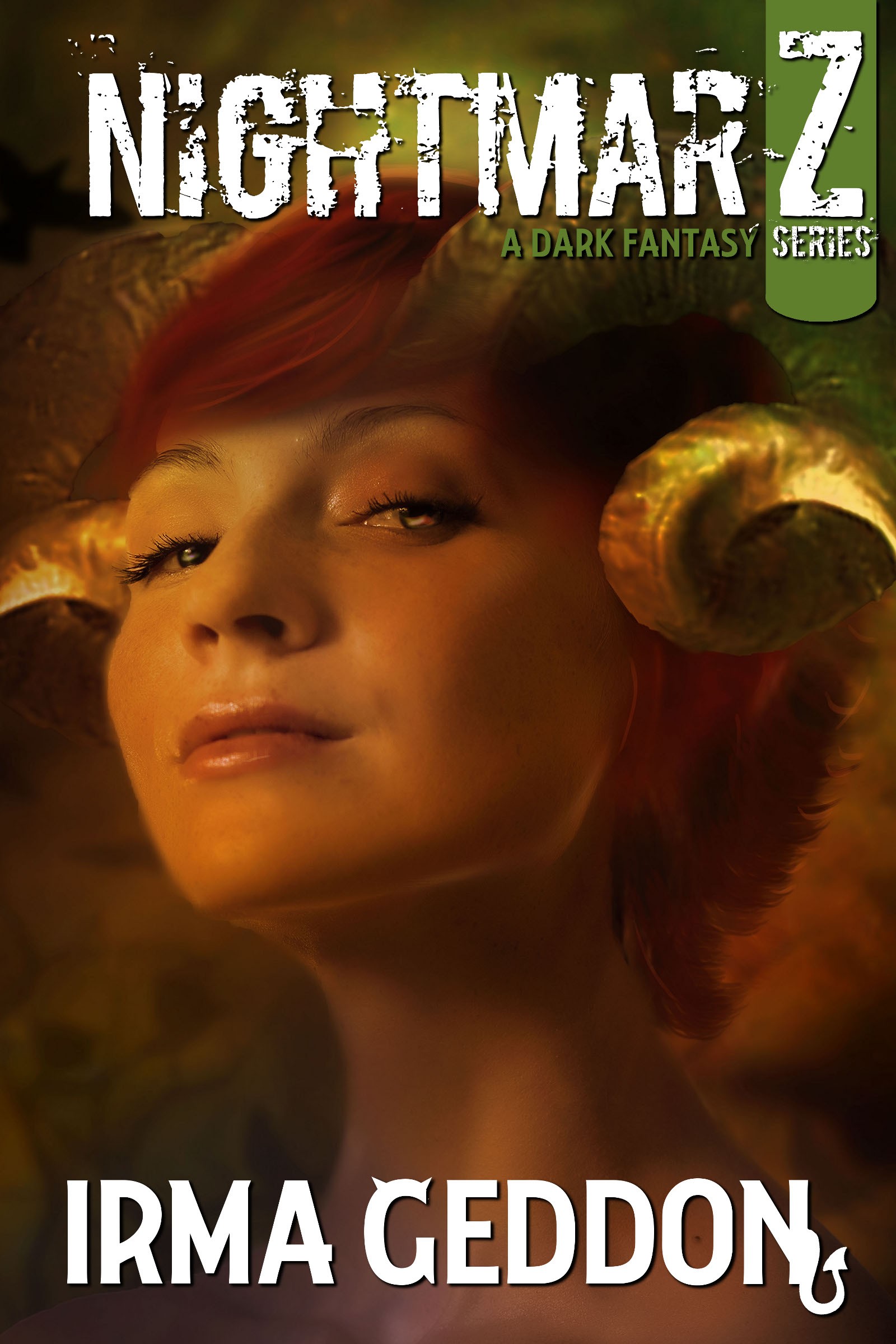
Cover NightmarZ Asylum Today I continue our irregular series of interviews with other indie writers and welcome Nathalie Hamidi a.k.a. Poison Godiva a.k.a. Irma Geddon to my blog. Irma is a French writer of dark fantasy and has been nice enough to answer some questions for me.

Hi Cora! Thanks for having me! ^^

  1. Tell us a little about yourself.

I have always wanted to do something creative with my life. When I was a young girl, I had dreams of playing music, singing, dancing, painting, and most of all, writing.

I have done all of this in time, but the one thing that stuck all those years with me (and the last 8 years in particular) was writing. As soon as I got the net at home, I started writing blogs (I was one of the blogosphere pioneers in France), with multiple secret identities, and then more recently I have started to write in my own name.

Life is hard, it’s difficult to find the time to write. My two sons are handicapped: they have a form of autism that goes from mild to severe, and they need constant stimulation for them to make progress. This has lead me to build a very big blog for french-speaking people who have autistic children, and to self-publish a few manuals along the way.

Now that my sons are getting a little bit older and go to school, I can use the time to work on my dream: writing fiction. To publish them I have had to overcome a lot of negative thoughts and dismissal, from people who should be supportive. And publishing, being happy, finding readers — even if it’s one by one — is it’s own reward.

  1. Tell us a bit about the Z series. What is the series about and how many episodes are there so far? How many do you have planned?

So far, I have published two episodes in the Z series, and I am working on episode 3. When I started rewriting and editing my stories, I already had the first eighteen episodes (or, the first three seasons) done. I feel I need at least two more seasons to tell the story right, but I might have to write more than that to feel satisfied with the story I want to tell.

The Z series is about a young girl, Gabrielle, who realizes that her nightmares are coming after her. Of course, this is a very frightening and emotional time for her. To add insult to injury, her father — witness to the first attack — decides to commit her to an asylum and abandons her there. We follow her while she tries to discover what is happening to her, and with the help of Parfait — a mysterious but helpful young man — we will try to understand what the curse that has plagued the women of her family in generations really is about.

I’ve wanted to tell a tale of accepting who you really are, striving for a better life, what love and trust really mean, and why it is important to rise above what life has handed to you. During the following seasons, those themes will evolve as well as Gabrielle.
Cover NightmarZ Parfait

  1. What was the inspiration for the Z series?

All my life, I’ve loved scary stories. Nothing moves me more than a great challenge, a suspenseful read, or a hair-rising, goose-bumping anticipation. I’ve also always been a big nerd about survival and being ready for the zombie apocalypse. I’ve devoured King’s books, Masterton’s, Koontz’s. All I ever wanted to do while reading their books was to write one of my own, to provoke in someone else the thrill I felt right then.

As I was readying myself for NaNoWriMo 2010, the clock was ticking and the beginning of the challenge was rapidly approaching. I was shuffling ideas for plots in my head — I had been unable to decide for one in the previous weeks, and I was quite panicked at the idea of starting November with a blank page in my head. Just before midnight, I had an idea that stuck with me: what if your nightmares became alive and attacked you. From that, during the next thirty days (of literary abandon), the story became alive by itself. I just followed Gabrielle’s and Parfait’s decisions and motives, and let my brain go free. I would have thought this would lead to nothing good, but the story stuck with me for three years before I decided to give it justice by editing it and publishing it.

  1. Z is a serial of novelettes. The serial is, depending on your POV either a very new format that was born from the indie e-book boom or a very old format revived for modern times. What are in your experience the main challenges of writing a serial and what is your approach? Do you have a series bible, detailed outlines, pre-planned plot arcs, etc…?

I love serials. They’re the TV show episode format for books. I have been, all my life, a big fan of good series on TV. Eighteen years ago, it was Buffy the Vampire Slayer, and now it’s Supernatural, Teen Wolf, The Walking Dead… I love that each episode is its own story and that it’s possible that all those episodes develop into a main theme for a season, have an overarching plot, and trickle into the next seasons as well.

With the ebook revolution, it’s now possible, more than ever, to really appreciate this format. I can’t be as avid a reader I once was because of all the work I have to do with my two sons, but eight years ago I would have jumped on that format, which permits a quicker publishing cycle. I always want more, more, more of the characters and universes I like. I like to be able to gorge myself with those stories, and not to need to revisit them after one year of waiting impatiently for the next book.

When I decided to try the serial approach, it came to me naturally without having to rewrite much from my first draft. I was already using the serial format: each episode must be satisfying, and move the plot forward. It was just a matter of cutting in the right places, and adding plot “reminders” in the following episodes — no one wants to re-read the previous episodes, so small reminders are a good thing for readers.

I don’t outline, or loosely. If I write down or tell the story to anyone, I lose the will to write it, so I just list a few ideas, and pick from that along the way, or do a small graph of the pacing of the season. My idea of a good pacing? It always gets worse before and after it gets better.

For writers who want to get into that format, I recommend reading The Secret Story Lair which is full of ideas, and re-watching your favourite shows season by season, to study how it’s done.
Cover NightmarZ

  1. The popularity of serials is controversial, to say the least, since some readers flat out hate serials. Have you ever run into such readers and how do you deal with them?

So far, I haven’t had one reader complain about the format in a way that would make me uncomfortable. The fact that I write short installments is of course mentioned, and some readers write in reviews that they would have prefered something longer, but no one has been aggressive or diminishing. Actually, I take it more like a compliment. They liked my words. They just wish there were more of them!

I think that every reader is entitled to want to read their format of choice. I like serials, so I’ll go on writing serials, since this is what makes me happy for the time being. I will also release a “complete season” ebook and paperback once all episodes are out, that way readers will have the choice: read all at once, or read it along the way, with the possibility of giving me feedback — I welcome feedback. The story is what it is, but I can make it more enjoyable for my readers when I rewrite my first drafts if I know what they are looking for!

  1. As a French native speaker writing and publishing in English, you’re one of a growing number of authors who write in a language that is not your mothertongue. Can you tell us a little bit about the challenges of writing in a language that is not your first? Did you have to deal with any prejudices?

I think I am one of the lucky ones. I have learned English, German and Italian at school, and those were my favourite lectures. I have worked in multilingual environments (in Germany, and for an Italian company), and I have always been praised for my language skills. But you never really know, because people want to be nice and think the fact that you can even converse in a language that is not yours is the ultimate achievement.

I came to the Kboards forum quite confident people wouldn’t slap me with a virtual trout if I made mistakes in English, but I really wanted to make sure that my books would be as much above reproach as possible, so I hired an editor to check them out, and this has been a great experience for me. That is why I don’t give any warning in my books about the fact that English is not my mother tongue, and why I have a little paragraph on my blog asking forgiveness if I make mistakes, since I don’t send forum or blog posts to my editor to check!

  1. In my experience, indie publishing and the e-book revolution has been a particular boon to international authors such as ourselves who live far from the centres of the English language trad publishing industry. Would you agree?

I agree one hundred percent. I can’t fathom why some e-distributors such as Barnes & Noble aren’t yet allowing people from outside the US to work directly with them.

I have a lot of “fans” in French-speaking countries, thanks to my autism weblog. Those are people who would probably buy my books, but won’t, since I write them in English. They’ve been pestering me (in a nice way) and asking me to have them translated in French for them, but for me it’s not yet worth the time or money spent…

English is one of the main languages on Earth. I have many more potential English-speaking readers than there are people who speak French. It’s much more valuable (and interesting) for me to publish in English.

  1. Did you ever pursue traditional publishing, either in French or English? And if so, what were your experiences?

I have never pursued traditional publishing. Until I learned about how it was possible to self-publish, I had stopped dreaming of being an author, because I knew that the waiting around, the rewriting of a story I like into something else, the false hopes, and the fact that my genre is not the one preferred by publishing hourses, would crush me. I just would not have the patience.

Then I learned about Amanda Hocking’s incredible achivement, I’ve bought and read all her books, and the little spark in my heart came back. If she could do it, why couldn’t I? I don’t even want the mega success story: I want to be able to tell my stories, have people read them, and eventually — if I’m lucky — to be able to do this for a living, at my own page.

I like to do my own thing. I like to be the chief, to be the only one who makes decisions with my art. I like being in charge: it’s a wonderful feeling that I’ve lost for the last fifteen years. It feels good to be back with a (writing) revenge!

Cover Calamari Spa Fantasies

  1. In addition to the Zseries, you also write non-fiction under your own name and erotica as Poison Godiva. Can you tell us a little about that?

In 2009, when I started blogging about autism, I realized there were a lot of people that needed help in France. The autism situation here is very dire, and our children are left without proper care, or even tortured by psychoanalytic whim. Other parents were at a loss on how to help their kids.

That’s why I wrote some manuals. They’re very easy to understand, and I aim to be readable by everyone: no scientific words are unexplained, I don’t assume you know even the most basic notion. A lot of people wrote me back to tell me how those books had helped them to potty train their kids, or how they gave them the strength to insist for a real diagnosis for their kid.

I hope to write more of them, based on my own successes with my own kids.

I want to explore more genres than non-fiction and dark fantasy, though, and that’s why I’ve dabbled a little bit in erotica with my Poison Godiva pen name. Erotica is one of the hardest genre to write in, in my opinion. It’s hard to produce something that can work for other readers — that’s true with any kind of fiction, but it’s particularly true for erotica. I like challenges, and most of all I like to write for myself first. I’m hoping some readers will find my paranormal erotica interesting as well.

But I’m not stopping there: I’ll try writing in more genres in the next few years, in order to see what I’m good at, what I really like, and maybe take a few readers on board with me.
Irma Geddon

  1. With Irma Geddon and Poison Godiva you have IMO two of the coolest pen names ever. How did you come up with them?

It’s like having DID (Dissociative Identity Disorder). Irma and Poison are like a part of me, as much as the Nathalie Hamidi part. Yeah, I know, weirdo, right?

Irma is my web-persona, the one that is strong. She is very nerdy, like a mix between a squeeing fangirl and a D&D monster, and does things Nathalie and Poison wouldn’t dare to do. The name came from my IRC days, where I used irma- as a nickname (for Irma Vep, the vampire film). I wanted a domain name for a while, and Irma Geddon was the one that fit: puntastic, as a reader put it, and it sounded like it came with a bang, which was what I wanted.

For my erotica pen name, I wondered how to find one tasteful and intriguing. I love the Lady Godiva story, it is a classic in erotica. Poison is because I love to write about women that know what they want, and are not afraid to say it — “toxic”, “phallic” girls, in the eyes of my nemesises, the French psycho-analysts.

There are a lot of pen names waiting for me to “wear”. As I discover new interests and plots for my fiction, I hope you’ll come to meet them too! 😉

  1. Is there anything else you want to tell our readers?

Reading and writing are some of the most important skills in life. If you can write, read, to get inspiration and to learn the craft.

If you can’t write, or don’t want to, read anyway, and engage with your favourite authors. Make their words/worlds yours by participating. Tell them if you feel their story was special, if it struck a chord in your heart or in your guts.

Authors feed on stories and contacts with their readers. Thank you reader—you make us feel like we’ve found our place in life and we’ve fulfilled our storytelling destiny when your eyes meet the pages of our books.

Thanks for answering my questions, Irma a.k.a. Nathalie a.k.a Poison.

If you want to find out more about Irma, visit her website and blog or follow her on Twitter. Her other personas Nathalie Hamidi and Poison Godiva may be found here. What is more, Irma has recently started Find, Read, Love, a discovery site for new indie books, organized according to author and genre.

The Z series is available at Amazon, Barnes & Noble, Kobo, Smashwords and Sony. The first installment, Asylum, is currently free so grab a copy and jump into the world of NightmarZ.

Send to Kindle
Posted in Books, Interviews, Writing | Tagged , , , , , , , , , , | 3 Comments

Mixed E-Book Links of Interest

For starters, the indie versus trad publishing or maybe both debate is still going on (and will probably be for a while yet).

SF writer Tobias Buckell cautions writers eager to jump into indie publishing that the big successes like Hugh Howey, Amanda Hocking, Bella Andre, H.M. Ward are outliers and that very few writers will find the same level of success. There is also an interview with Tobias Buckell at Teleread, wherein he explains some of his points in more detail. I’ve got some serious issues with both the original post and the interview, for while I agree with many of his basic points (“Being successful in the arts his hard”, “Keep an open mind and try all platforms and publishing methods”, “The big successes skew the data”, etc…), Tobias Buckell’s overall tone, his use of buzzwords like “cognitive surplus” and “survivorship bias” and the way he compares the indie publishing world to a cult and an echo chamber and snake oil salesmen drive me up the wall. In the comment section at The Passive Voice, they’re not impressed either.

Meanwhile, Chuck Wendig unsurprisingly agrees with Tobias Buckell, though his post doesn’t manage to raise my hackles quite so much. Plus, Chuck Wendig actually remembers that it was Flavor-Aid and not Kool-Aid that Jim Jones used to poison his followers in Guyana. I still wish we could retire the phrase “drink the Flavor/Kool-Aid” forever, because frankly I find it offensive. Never mind that Chuck Wendig and Tobias Buckell and others commenting along the same lines – writers, mostly newish, who are open to the idea of self-publishing, but still prefer trad publishing – have their own biases and their own clique of followers who latch onto their words, because they are saying exactly what those followers want to hear.

At Grub Street Daily, the blog of the Boston based Grub Street writing workshop, founder Eva Bridberg relates how she often had to defend her workshop in the early years to people who believed that she wasn’t qualified to teach writing and how many seemed threatened by her insistence on teaching writing, even though she did not have the “proper” credentials in their eyes. She relates her experiences to those facing many indie writers who have to justify themselves for daring to put their work out there without going through the proper channels and who get hostility from those who for whatever reason feel threatened by the rise of indie publishing. Found via The Passive Voice.

At The Writer’s Guide to E-Publishing, India Drummond explains how to get into Amazon’s new subcategories in the romance and SFF genres. Given how vague and broad and just plain ill-fitting many of the KDP categories were, this is a very good thing. Now to figure out how to get Hostage to Passion and Rites of Passage into the “pirates” category. Found via The Passive Voice.

The New York Times reports about the various daily deals offered by Amazon and Barnes & Noble as well as about bargain books sites/newsletters like BookBub (Somehow, I always imagine Wolverine hawking cheap e-books, when I hear the name of that site), Ereader News Today and Pixel of Ink. The article caused some hilarity of the “Duh – they only notice that now” variety in the comment section of The Passive Voice, though all I really took away from all this is that I am apparently highly atypical of the book buying population, since I hardly bother with this sort of special deals at all. Until I googled them for this post, I’d never actually seen BookBub or Pixel of Ink, though I’ve heard their names repeated hundreds of times on the Kindleboards.

The next post is not exactly new (it’s from 2011), but still relevant: At Futurebook, Piotr Kowalczyk from Poland explains why Kobo is better suited for international expansion than its rivals Amazon and Apple, namely because Kobo does not charge international fees such as the Amazon surcharge, supports languages like Polish which e.g. the Kindle does not support without hacking, uses e-pub rather than mobi format, which is more common among non-Kindle readers, and actually offers content in many languages. I totally agree with his assessment and would also add that Kobo readers are sold in brick and mortar electronics stores and supermarkets worldwide, whereas Kindles are typically only found at Amazon. I walked into a Media Markt electronics store to buy my Kobo Glo – straight from the pallet, too. A reader in Poland or Turkey or South Africa or Australia can do the same. And indeed, the rather detailed breakdown of sales according to country on the Kobo Writing Life dashboard prove that Kobo is selling in countries where Amazon is far from dominant. For example, our German language titles sell pretty well in Switzerland… on Kobo.

This is a great idea: Italian publisher RCS Libri has come up with a way to allow sampling an e-book via clicking on a Pinterest pin of a book cover. Here at Pegasus Pulp, we have only recently gotten started on Pinterest. So far, I have mainly used it to collect images related to the Silencer series and images related to the Zane Smith and Shoushan Kariyan series. We also have a board with book covers and one with inspirational quotes about writing and reading. I doubt that Pinterest actually sells books (though maybe those Italians have found the trick), but it’s fun, especially if you’re a visual person like me.

Send to Kindle
Posted in Bookselling, Links, Publishing, Writing | Tagged , , , , , , , , , , , | 1 Comment

The Renaissance of Short Fiction Revisited

Back in February, I wrote a post on this blog about how the internet and the e-book revolution have brought about a renaissance of short fiction. Since so far, all of our e-books here at Pegasus Pulp are either short stories, novelettes or collections (though there are some novellas or even full length novels coming up), this renaissance of short fiction does of course make me happy.

Now May 2013 is apparently the first international short story month (following international poetry month in April), so it’s time to revisit the subject. Plus, I recently came across two good blogposts about the resurgence of short fiction in this new world of publishing, both from Anne R. Allen, whose blog is chock full of great writing advice.

Anne R. Allen’s first post from last year about why short stories are suddenly viable really resonated with me, because it matches my experience so closely, even though we write in different genres. Those teeny literary journals with more or less silly names that didn’t even pay in anything except prestige and whose editors still behaved as if their teeny tiny mag was The New Yorker? Trust me, I’ve been there. Hell, I even worked for one of them – newleaf, the English language literary magazine of the University of Bremen (and for the record, unlike many other small journals, newleaf was an excellent mag almost from the start and not just because they printed my first published short story in their second issue). In fact, working for newleaf is where I gained much of the publishing experience that helped me get Pegasus Pulp Publishing of the ground.

I also understand her point that until fairly recently, writing short fiction was not really a viable prospect outside certain genres such as the trinity of speculative fiction, which managed to maintain an active short fiction market even after magazines died off left, right and centre in other genres. But if you wrote mystery or romance or historical fiction or western short fiction, your prospects were very bleak indeed.

However, unlike Anne R. Allen, I always wrote a lot of short fiction alongside my longer works. I partly wrote short stories, because short fiction sized ideas kept ambushing me, partly because I took all the creative writing classes I could at university, where even 3000 words were considered excessively (rudely so, as one of my least favourite fellow students informed me with reference to a 1600 words short story, which is collected here, by the way) long, partly because my first writing love was still the SFF genre, where selling short fiction is still considered a viable way of breaking in. However, I didn’t just write SFF shorts, but I wrote in other genres as well. For example, I wrote a lot of short crime fiction, since self-contained crime shorts were (and still are) a staple in the backpages of German general interest magazines, so I figured they’d be easier to sell, because there obviously was a market for them. Of course, I made a fatal miscalculation, for while there is a market for short crime fiction in Germany, I wrote in English, where there was hardly any market for short crime fiction at all. Eventually, I took all of those crime shorts I had accumulated and collected them in Murder in the Family.

This also echoes another point Anne R. Allen makes in her post, namely that all of those long out of print backlist short stories published in mags with tiny circulations never mind all of those unsold short stories gathering virtual dust on our harddrives are suddenly not just viable but valuable. And I certainly had a big inventory of out of print and unpublished short stories and novelettes lying around. In fact, I wasn’t even aware how big until I went through my files and did a tally. Now not all of those stories are gold. Many, particularly the early ones, are either completely unsalvagable like that heavy-handed story about racism and an interracial relationship in 1960s Mississippi (Argh, what was I thinking?) or so dated to be unpublishable such as that otherwise neat romance about a couple parting at the airport, where the guy pretty much crashes through the security check to persuade her to stay, which would only get him arrested or shot in this post September 11th world, or only publishable with some very heavy revisions. In fact, I’m currently in the process of revising a post-apocalyptic SF story first written almost twenty years ago. When I’m done pretty much nothing will remain of the original except for the plot (which I still like even twenty years on) and some snippets of dialogue (I was always good at writing dialogue, even very early on). But enough of the many, many stories I wrote over the years are actually pretty good. And quite a few of them are already out there, earning me money (some more, some less), instead of languishing unread on my harddrive.

Now Anne R. Allen has written a follow-up to her post from last year listing ten reasons why short stories are hot and also included some links to legit contests and webzines publishing short fiction. And if your in the mood for more numbered lists, Doug Lance also offers five ways short fiction can boost an author’s career at The Creative Penn.

Finally, here is another post from last year that’s still as pertinent today as it was back in the summer of 2012, namely Dean Wesley Smith explaining how you can make a living writing short fiction. Now I cannot produce fifty new short stories in a year, in fact I cannot even get fifty existing stories edited, formatted and published in a year. Nonetheless, Dean’s post is immensely inspirational, because even if you cannot produce on the schedule he proposes, he is still correct that having a lot of short fiction for sale (Pegasus Pulp currently has 35 e-books available altogether) not just increases your digital footprint at the various retailers, it also tends to add up.

That Dean Wesley Smith post I just linked to proved to be unexpectedly controversial and led to a vehement multi-page discussion on the Kindleboards (which has since then vanished into the ether, which is probably for the best) in which plenty of people claimed that what Dean Wesley Smith was proposing was flat out impossible. Even after various writers chimed in stating that they were having a lot of success with short fiction, plenty of people still refused to believe them and worse, accused them of lying, because they wouldn’t publicly share their sales data. One poster in particular was calling the idea of writing and selling a lot of different short stories a “scam”, a “get rich quick scheme” and called prolific short story writers “content farmers”. Other people call those selling standalone short stories “scammers” in general, especially when they – gasp – dare to charge money for their hard work. Of course, those are also invariably the same people who will sell their full length novels for 99 cents.

Now I fully understand why someone doesn’t want to read short fiction. We all have disparate tastes. For example, I flat out hate memoirs and have no idea why anybody buys, let alone reads them. But I don’t mind the fact that there are memoirs available out there, since plenty of people obviously do like them, even if I don’t. However, those that don’t like short fiction would just love for it to disappear altogether or at least be banished to collections, anthologies and magazines, where they don’t have to see it.

I really don’t get this vehement hatred for short fiction and serials (which certain people hate almost as much). It’s almost as if some people feel offended by the very idea that standalone short fiction exists at all. Perhaps it’s also the idea of writing fast that offends some writers out there, at any rate discussions about fast versus slow writing pop up all the time on the Kindleboards and other writerly forums.

Nobody has to read or like short fiction or serials, but calling those who write them “scammers” or “content farmers” is just plain rude IMO. May is international short story month. So why not give the format a chance and read a short story or five?

Send to Kindle
Posted in Books, Links, Writing | Tagged , , , , , , | 5 Comments

A Handful of Plugs

I’ve plugged my own latest release, so here are plugs for other people’s books and events.

Among the many how-to books about self-publishing out there, Let’s Get Digital by David Gaughran is the gold standard. Now the sequel (of sort) Let’s Get Visible is out. Where Let’s Get Digital serves as an introduction to digital self-publishing and focuses on getting your e-books out there, Let’s Get Visible focuses on the next step, namely how to promote and sell them. A lot of the book focuses on the sort of Amazon algorithm voodoo that I don’t much care for and some strategies such as frequent price-changing are flat-out illegal in Germany due to the fixed book price agreement. Nonetheless, Let’s Get Digital and Let’s Get Visible are indispensible resources for every serious self-publisher.

YA writer Elle Casey has organized a massive giveaway of indie books, which ends May 15 at midnight EST.

Send to Kindle
Posted in Books, Links | Tagged , , , | 1 Comment

A German Bestseller

Unter der Knute, the German edition of Under the Knout, has edged onto the category bestseller list for German language short fiction at Amazon DE at No. 92.

It probably will only stay there for an hour or so, but meanwhile my little story not just hit a German language category bestseller list (not the first time that’s happened either), it also found itself just above the delightfully titled Fickt Euch Alle (Go fuck yourselves, all of you), a short fiction anthology edited by Susann Klossek.

Luckily for Ms. Klossek and her cowriters, the Amazon bots don’t speak German, for we’ve been receiving reports of late that Amazon is marking any indie title that sounds even remotely risqué is “adult” and filtering it from the general search results. Which is troubling in itself, for while no one has any issues with allowing users to filter adult titles out of their search results if they wish, the way in which Amazon is doing it is highly problematic. Allowing users to toggle an “include adult products” button on and off like Smashwords and Google do would be much more helpful.

As far as I can tell, Fickt Euch Alle is not erotica at all BTW, but an anthology of bizarro fiction. However, the adult filter at Amazon.com has also hit plenty of regular romances alongside genuinely erotic titles.

Send to Kindle
Posted in Announcements, Books | Tagged , , , , | 5 Comments

New Release: The Dark Lily

The Dark Lily, our latest release here at Pegasus Pulp is not just a return to the spy fiction genre and to the swinging sixties, but also a prequel to The Other Side of the Curtain, which was one of our launch titles back in 2011. For those who are curious about how Zane Smith and Shoushan Kariyan first met, this is the story for you.

Plus, I’m very proud of the groovy psychedelic cover in the style of Wes Wilson or Peter Max.

The Dark Lily
The Dark Lily Beirut, 1965. Eccentric American billionaire Zane Smith is quite entranced by tattooed dancer known only as the Dark Lily. In fact, he is so entranced that he takes her back to his hotel room for a private performance. It’s only when he wakes up in the morning with one hell of a headache and the Dark Lily gone that Smith realizes he may have bitten off more than he can chew.
However, none of the valuables in Smith’s hotel room is missing – nothing save an invitation to a party at the American embassy in Beirut. But why would an exotic dancer attempt to snatch an invitation to an embassy party for herself? And who is the mysterious Dark Lily?
.

For more information, visit The Dark Lily page.

Buy it for the low price of 2.99 USD, EUR or GBP at Amazon US, Amazon UK, Amazon Germany, Amazon France, Amazon Spain, Amazon Italy, Amazon Canada, Amazon Brazil, Amazon Japan, Kobo, Barnes & Noble, Apple iTunes, Casa del Libro, W.H. Smith, DriveThruFiction, OmniLit/AllRomance ebooks and XinXii.
More formats coming soon.

Send to Kindle
Posted in Announcements, Books | Tagged , , , | 1 Comment